Articles & Updates
Practical guidance on UAE tax, accounting and compliance — written by our team for business owners and finance managers.
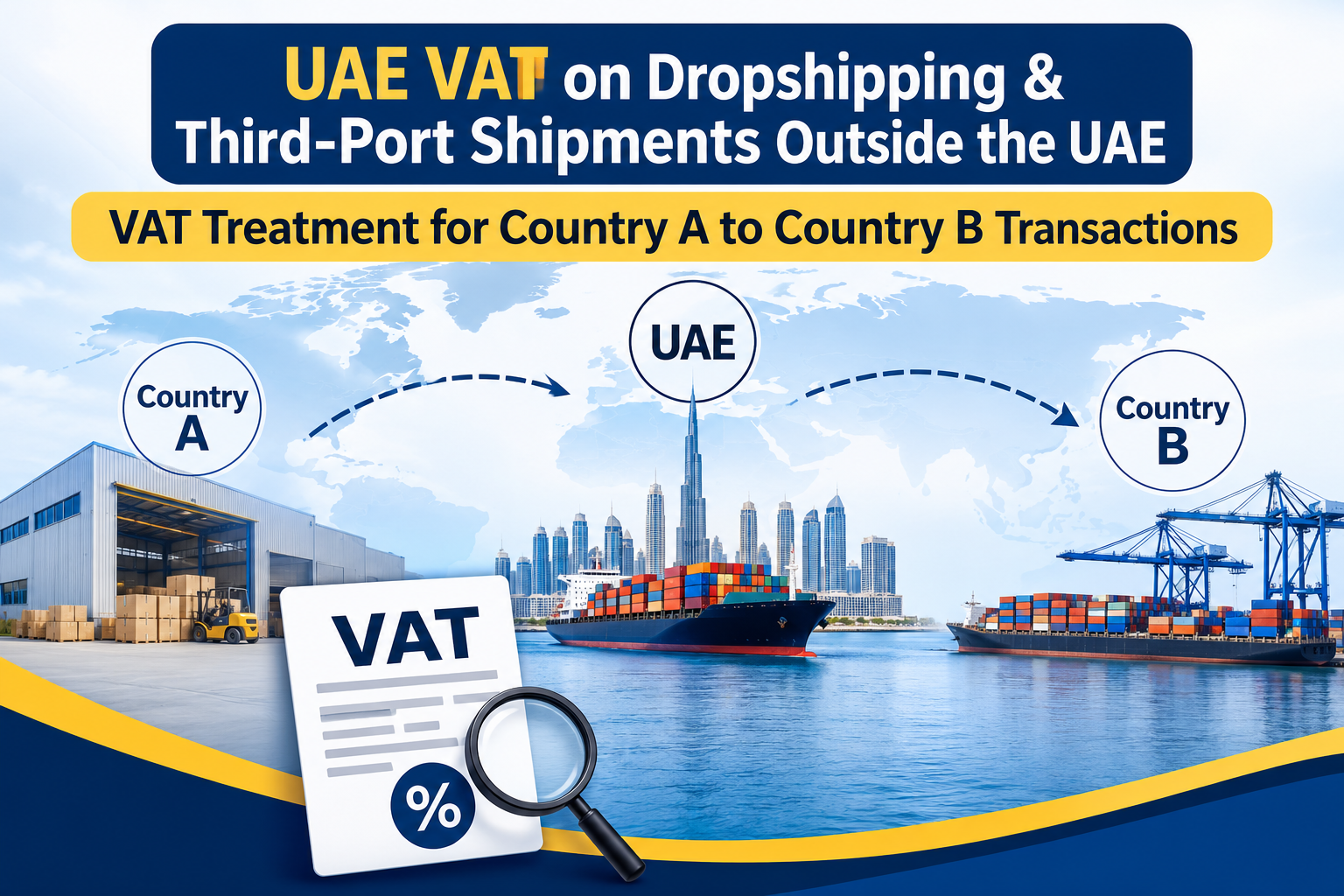
UAE VAT on Dropshipping & Third-Port Shipments Outside the UAE-VAT Treatment for Country A to Country B Transactions
When goods are purchased and sold through a UAE Mainland or Designated Zone entity but move directly from Country A to Country B without entering the UAE, the transaction may be treated as Out of Scope for UAE VAT. This guide explains the VAT implications, customs considerations, documentation requirements, FTA audit expectations, and compliance best practices for third-port trading and dropshipping businesses.
Read articleMore articles
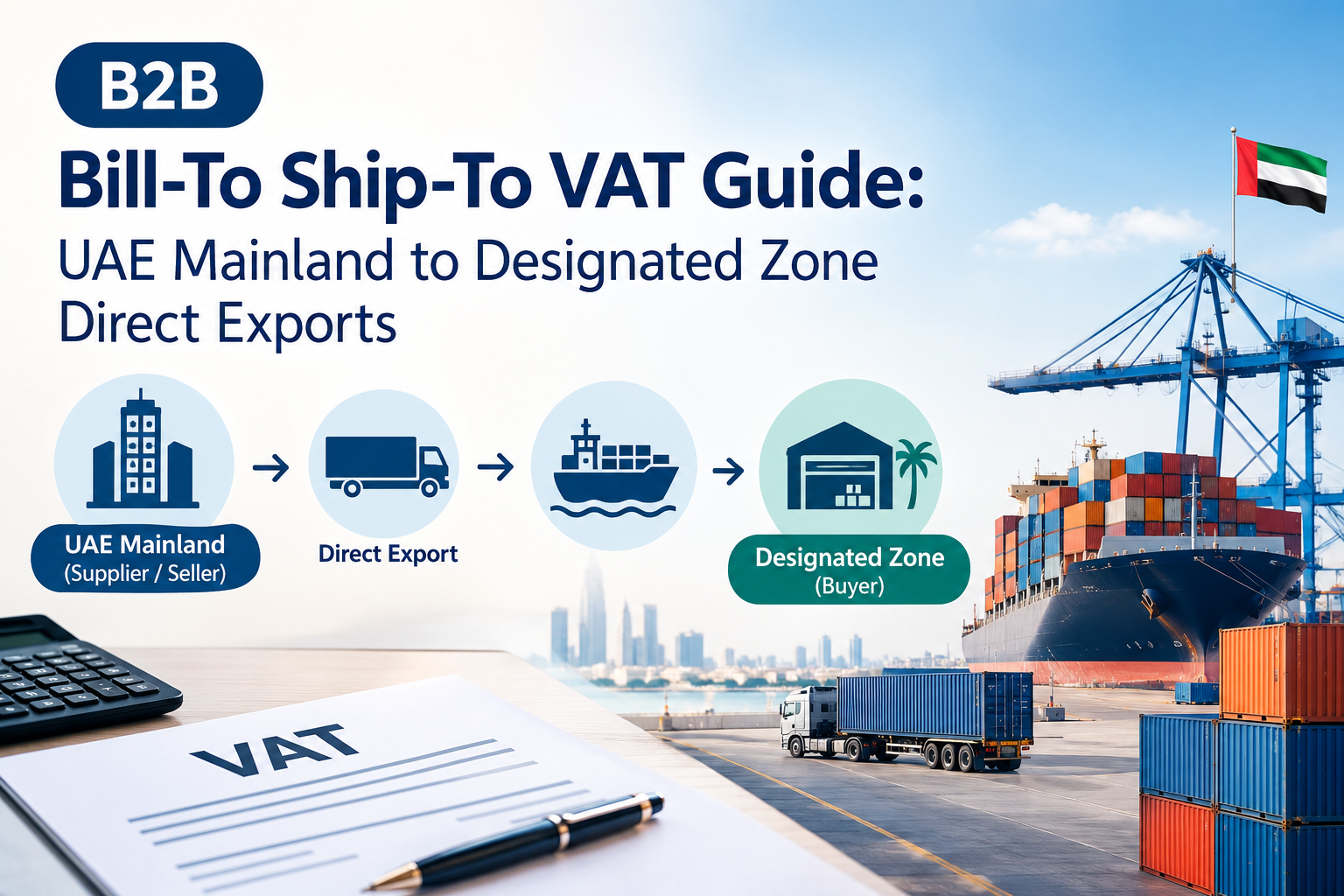
B2B Bill-To Ship-To VAT Guide: UAE Mainland to Designated Zone- Direct Exports
Navigating a Bill-To Ship-To chain from UAE Mainland to overseas via a Designated Zone? Discover the exact documentation and customs coding steps required to lock in 0% VAT, secure Out-of-Scope treatment, and survive an FTA audit.

UAE VAT Update on Virtual Assets: Comprehensive Guide for Crypto, NFT & Digital Asset Businesses
The UAE has introduced landmark VAT clarifications for virtual assets—cryptocurrencies, NFTs, and other digital tokens—effective retroactively from 1 January 2018. These rules redefine how digital asset transactions are taxed, classify key activities as VAT‑exempt financial services, introduce zero‑rating for exports, and apply reverse charge on cross‑border fees. This guide breaks down the new framework, compliance risks, and strategic actions businesses must take.
Revised Administrative Penalties: A Wake‑Up Call for VAT Compliance Under the April 2026 UAE Regime
The UAE’s revised administrative penalty framework—effective 14 April 2026—marks a structural shift in how VAT non‑compliance is penalised. While the new regime is simpler and more standardised, its commercial impact is far more nuanced. This article analyses the implications for Voluntary Disclosures (VDs), tax audits, and long‑tail VAT risk, highlighting why timing—not percentage rates—is now the biggest cost driver.
VAT Treatment of Recharges, Disbursements & Reimbursements in the UAE
Understanding whether a recharge constitutes a taxable supply under UAE VAT remains one of the most debated areas. With the FTA’s Public Clarification VATP013, businesses must reassess their treatment of disbursements versus reimbursements, evaluate standalone vs ancillary supplies, and ensure documentation and accounting presentation align with VAT requirements.

Your First UAE Corporate Tax Return: Everything You Need to File Correctly
Filing your first UAE Corporate Tax Return can feel overwhelming, especially with new rules under Federal Decree‑Law No. 47 of 2022. This practical guide explains who must file, deadlines, required documents, how to calculate taxable income, transfer pricing disclosures, and common mistakes to avoid—so you can submit your first return on EmaraTax with confidence.

Critical Accounting Mistakes UAE Startups Must Avoid in 2026
UAE startups often focus on branding, product development, and customer acquisition — but overlook the financial systems that sustain long‑term growth. Weak accounting practices can quietly damage a startup’s stability, leading to compliance issues, cash flow gaps, and investor concerns. This guide highlights the critical accounting mistakes UAE founders must avoid in 2026, ensuring your business remains compliant, financially healthy, and investor‑ready.
Input VAT on Employee Expenses: What Businesses Can Recover Under the New Decision (Effective 1 October 2026)
The new UAE VAT Decision finally clarifies when employee‑related expenses qualify for input VAT recovery. While the rules offer more certainty, they also impose strict documentation, policy requirements and evidence standards. Businesses must demonstrate that expenses are genuinely business‑driven, reasonable, and supported by internal controls.

Why Real Estate Companies Are Turning to Outsourced Accounting and Compliance Services
Real estate companies today face increasing financial complexity, stringent compliance requirements, and rising operational costs. From AML obligations to UAE Corporate Tax and VAT compliance, firms are under pressure to maintain accurate reporting while managing multiple properties and transactions. Outsourcing accounting has emerged as a strategic solution — enabling real estate businesses to reduce costs, enhance compliance, leverage advanced technology, and gain deeper financial insights that support long-term growth.