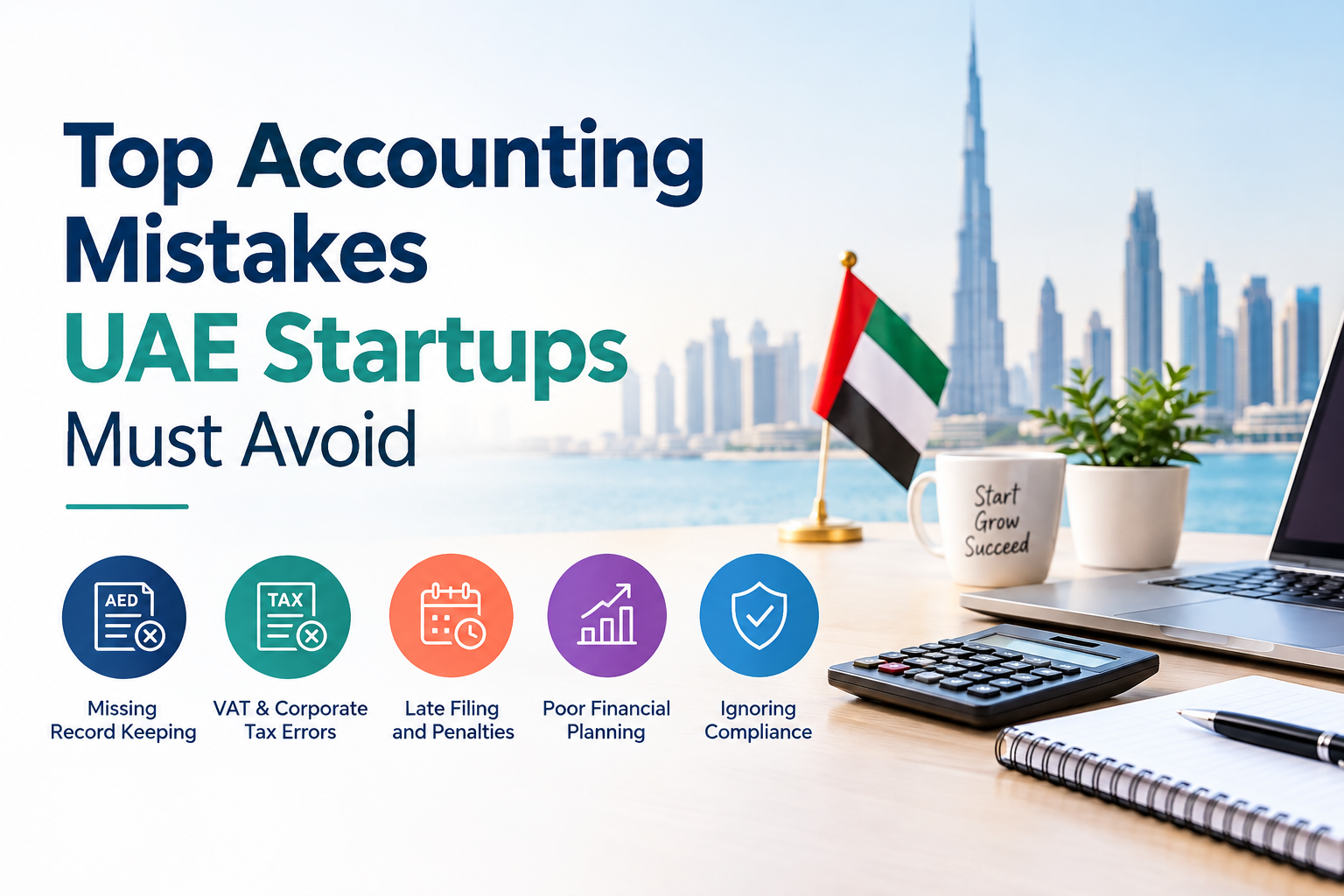
Building a financially strong startup begins with avoiding the mistakes that silently weaken your foundation.
On This Page
- Why Accounting Matters for UAE Startups
- Main Accounting Mistakes to Avoid
- Smart Startup Practices (Call-Out Box)
- High-Risk Compliance Errors (Warning Box)
- Key Takeaways
- Frequently Asked Questions (FAQ)
Why Accounting Matters for UAE Startups
Launching a startup in the UAE is exciting—your branding is ready, your pitch deck works, and you may already have your first customers. But once the initial momentum settles, the real challenge begins: maintaining accurate, compliant, and investor-ready accounting records.
“After getting your startup off the ground comes the crucial (and often overlooked) part, which is ensuring accurate accounting reporting…”
Poor accounting practices lead to regulatory fines, investor hesitation, cash flow issues, and operational inefficiencies. Below is a structured breakdown of the most common mistakes UAE startups make—and how to avoid them.
Main Accounting Mistakes UAE Startups Should Avoid
1. Mixing Personal & Business Expenses
Many founders use personal funds for business transactions in the early stages, creating confusion, inaccurate reporting, and VAT non-compliance.
Why It Hurts You
- Distorted financial statements
- Difficult audits
- VAT penalties
Fix It
- Open a dedicated business bank account
- Use accounting software for categorisation
- Get professional cleanup support early
“This lack of separation is one of the most common financial missteps among start-up founders.”
2. Ignoring Monthly Accounting Reports
Quarterly reviews are not enough—monthly reporting is essential.
Why Monthly Reports Matter
- Early detection of cash flow gaps
- Better decision-making
- Clear visibility of growth metrics
“Monthly financial reviews must be a non-negotiable habit…”
3. Delaying VAT Registration
If your turnover exceeds AED 375,000, VAT registration is mandatory.
Consequences of Delay
- Fines
- Perception of non-compliance
- Missed VAT recovery
“Delays not only result in fines but also negatively affect your firm’s credibility.”
4. Poor Cash Flow Forecasting
Profit does not equal liquidity. Many startups fail due to cash flow mismanagement.
Common Issues
- Late client payments
- Prepaid supplier costs
- Using personal funds to cover gaps
“Profitability on paper does not always translate to liquidity.”
5. DIY Accounting Without Expertise
Spreadsheets are not a long-term solution.
Risks
- Misclassified transactions
- Incomplete records
- Missing audit documentation
6. Weak Internal Controls
Startups often overlook basic controls.
Examples
- One person handling all financial tasks
- No secure access controls
- No audit trail
7. Not Understanding Financial Reports
Accounting is not just compliance—it’s strategy.
Why It Matters
- Investors expect clarity
- Helps with pricing, hiring, budgeting
- Prevents reactive decision-making
8. Preparing for Fundraising Too Late
Investors expect clean, reconciled, transparent financials.
Investor Expectations
- Accurate statements
- Clear burn rate
- Proper VAT compliance
9. Poor Financial Documentation
Missing documentation leads to audit challenges.
Must-Have Records
- Invoices
- Agreements
- VAT returns
- Monthly reports
10. Underestimating Professional Accounting Support
Founders often hesitate due to perceived cost—but the long-term benefits outweigh it.
Benefits
- Reduced risk
- Better forecasting
- Investor confidence
Smart Startup Practices
Smart startups don’t just innovate—they manage finances strategically.
Invest early in proper accounting systems, monthly reporting, and compliance to build a strong financial foundation.
High-Risk Compliance Errors
Avoid these at all costs:
- Delaying VAT registration
- Mixing personal and business expenses
- Not maintaining proper documentation
- Ignoring monthly financial reviews
These mistakes directly lead to regulatory fines, cash flow crises, and investor rejection.
Key Takeaways
- Separate business and personal finances immediately
- Monthly accounting reports are essential
- VAT registration must be timely
- Cash flow forecasting prevents liquidity issues
- DIY accounting is risky
- Internal controls protect against fraud
- Financial reports guide strategic decisions
- Fundraising requires early preparation
- Documentation must be organised
- Professional accounting support accelerates growth
Frequently Asked Questions (FAQ)
1. When should a UAE startup register for VAT?
Once taxable supplies exceed AED 375,000, registration becomes mandatory.
2. Do small startups really need monthly accounting reports?
Yes—monthly reports help track cash flow, profitability, and financial health.
3. Can I manage accounting myself using spreadsheets?
Only in the earliest stage. Beyond that, DIY accounting leads to errors and compliance issues.
4. What documents should I maintain for audits?
Invoices, contracts, VAT returns, payroll records, and monthly financial statements.
5. Why do investors care about accounting?
Clean financials demonstrate credibility, stability, and readiness for growth.
How Holistic Solutions Can Help?
Holistic Solutions at Ras Al Khaimah has been serving UAE businesses with a team of accountants, tax advisors, auditors, and consultants. Whether you need Monthly Accounting Reports, Management Accounting Services, VAT support, or full-service Accounting, we help you build a strong financial foundation.