By Holistic Solutions & Trade FZ LLC — UAE Tax, Accounting & Compliance Experts
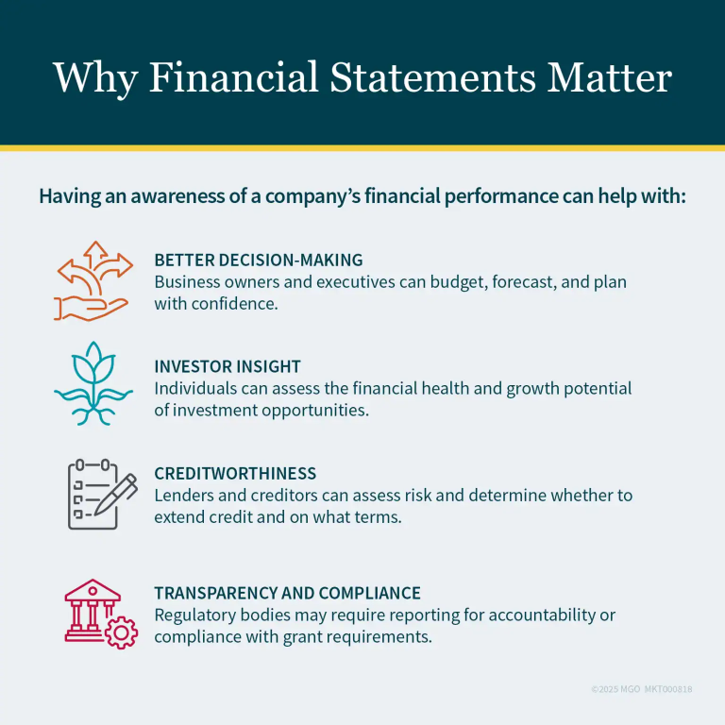
Financial statements are the most honest, objective summary of your business’s health. Yet many UAE entrepreneurs glance only at the profit figure and move on — missing insights that could transform decision‑making. As your compliance partner, Holistic Solutions breaks down the three core financial statements in clear, practical language, with UAE Corporate Tax and VAT implications woven throughout.
Your financial statements are the most honest, objective summary of your business’s health available.
About the Topic
Financial statements reveal how your business performs, how healthy it is today, and whether it can survive tomorrow. They answer three fundamental questions:
- Profit & Loss (P&L): Did you make money this period?
- Balance Sheet: What do you own and owe right now?
- Cash Flow Statement: Where did the cash actually go?
Understanding these statements is essential for compliance, growth, and survival — especially under UAE Corporate Tax.
Quick Answers
-
Three statements, three questions: P&L = profitability, Balance Sheet = financial position, Cash Flow = liquidity.
-
Profit ≠ Cash: A profitable business can still run out of cash.
-
Gross margin trend matters: Falling margins signal pricing pressure or rising direct costs.
-
Current ratio < 1.0 is a warning: Short‑term liabilities exceed short‑term assets.
-
Corporate Tax starts from accounting profit: Poor bookkeeping = incorrect tax return.
1) Profit & Loss Statement (P&L)
The P&L shows revenue, direct costs, overheads, and profit over a period. It is the primary view of how your business performed during the month, quarter, or year.
Sample P&L Structure:
Revenue
│
├── Cost of Goods Sold (COGS)
│       ↓
│   Gross Profit
│
├── Operating Expenses
│       ↓
│   Operating Profit (EBIT)
│
├── Finance Costs
│       ↓
│   Net Profit Before Tax
│
└── Corporate Tax → Net Profit After Tax
What to watch:
- Revenue trend
- Gross margin %
- Overheads vs revenue
- Net profit drivers
Gross profit margin… tells you how efficient your core business model is.
2) Balance Sheet
The balance sheet is a snapshot of assets, liabilities, and equity at a single moment. It answers the question: what does your business own and what does it owe right now?
Balance Sheet Snapshot:
Assets = Liabilities + Equity
Key ratios:
- Current Ratio = Current Assets ÷ Current Liabilities
- Debt‑to‑Equity Ratio = Total Liabilities ÷ Total Equity
Below 1.0 suggests potential liquidity stress.
3) Cash Flow Statement
The cash flow statement shows actual cash movement — the lifeline of your business. It explains where cash came from and where it went across operating, investing, and financing activities.
Cash Flow Breakdown:
Operating Cash Flow
Investing Cash Flow
Financing Cash Flow
= Net Change in Cash
A business can report a healthy profit on the P&L but have zero cash in the bank.
4) Statement of Changes in Equity
The statement of changes in equity tracks movements in share capital, retained earnings, and dividends over the reporting period.
Formula:
Beginning Equity + Net Income – Dividends ± Other Changes = Ending Equity
Corporate Tax, VAT, Audit & UAE Law Points
Corporate Tax (CT)
- CT return starts from accounting profit on the P&L.
- Adjustments are required for non‑deductible expenses.
- Audit is mandatory for revenue above AED 50 million.
VAT
- VAT does not appear on the P&L.
- VAT payable and recoverable sit on the balance sheet.
- Net VAT is paid to or refunded by the FTA.
Audit & Free Zone Requirements
- Many free zones require audited accounts for licence renewal.
- Audited accounts strengthen banking and investor confidence.
Mistakes to Avoid
Profit alone hides cash issues, debt pressure, and liquidity risks.
Margins reveal pricing pressure long before net profit does.
Slow collections, inventory purchases, and loan repayments distort cash.
Anything less frequent means you are flying blind.
They are decision‑making tools — not compliance paperwork.
Decision Framework
Step 1 — Start with the P&L:
Check revenue, gross margin, overheads, and net profit.
Step 2 — Review the Balance Sheet:
Assess liquidity, debt levels, and working capital.
Step 3 — Analyse Cash Flow:
Ensure operating cash flow is positive.
Step 4 — Check Equity Movements:
Understand retained earnings and dividend decisions.
Step 5 — Use Ratios:
Compare liquidity, leverage, and profitability across periods.
Frequently Asked Questions (FAQ)
Profit is accounting‑based; cash flow is actual money movement. A business can be profitable but cash‑poor.
Audit is mandatory above AED 50M revenue and required by many free zones.
Gross margin trend — it’s the earliest indicator of business health.
Monthly for management accounts, quarterly with your advisor, and annually for audit.
On the balance sheet as VAT payable or recoverable.
Key Takeaways
- Financial statements are essential decision‑making tools.
- Profit ≠ cash — always read the cash flow statement.
- Gross margin trend is the strongest early warning signal.
- Balance sheet ratios reveal liquidity and solvency.
- UAE Corporate Tax relies on accurate accounting records.
- Regular review prevents surprises and strengthens compliance.
How Holistic Solutions Can Help
Holistic Solutions prepares clear, audit‑ready financial statements for UAE SMEs and explains what the numbers truly mean. We convert your reporting into a strategic decision tool — not just a compliance requirement. Book a consultation and strengthen your financial clarity, tax compliance, and business performance.